by aramatzne@gmail.com | 1 Jun 2016 | Musing, Roads Taken
A few weeks ago in a random historic-site parking lot in far-flung western Colorado I met a 60-something woman from Atlanta. “You’re traveling alone? Well good for you. I always wanted to do that but I just don’t have the courage. Some day I will. You’ve never had any problems?”
This is a common question when people see me alone. A few variables in wording, some more direct language about scary people and places to avoid, but the sentiment is the same.
I’ve worked alone in many remote places over the years. I have occasionally stepped out of sight when I felt unsure about what was coming my way. I’m more often worried about destroying an axle, not finding my way out of a random maze of canyons, or falling off a cliff than about other people.
A few years ago while traveling in Scotland with an old friend, we were ready to stop for the night; we needed food, Scotch whisky, and a place to stay. We found a pub with a few rooms for let on the second floor but they were already full for the night.
Explaining that we would like to have dinner and a wee dram or two of whisky, we asked for a recommendation on a B&B within walking distance. Oh, well, sit, eat, we’ll call around and see what we can find.
We sat, we drank, we ate.
“So, I found a place for you to stay,” the owner, a rather burly Scotsman, told us. “At ten o’clock I’ll take you out back to the walking bridge over the river. You can take your bags across with you; a man will meet you on the other side with his car, and take you to his B&B for the night.”
My friend and I looked at each other. In the US, this is a set up for an Alfred Hitchcock movie.
He continued, “There’s only one problem.”
We looked at each other again, clearly thinking the same thing: there’s only one problem with a man transferring two American women across a Scottish river to another unknown man in the middle of the night?
“The breakfast is vegetarian.”
Of course, we should have thought of that. A vegetarian breakfast could be a problem; those tempeh sausages just don’t set well with many.
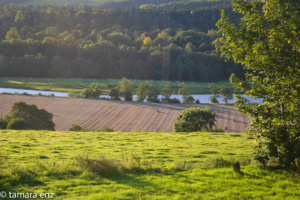
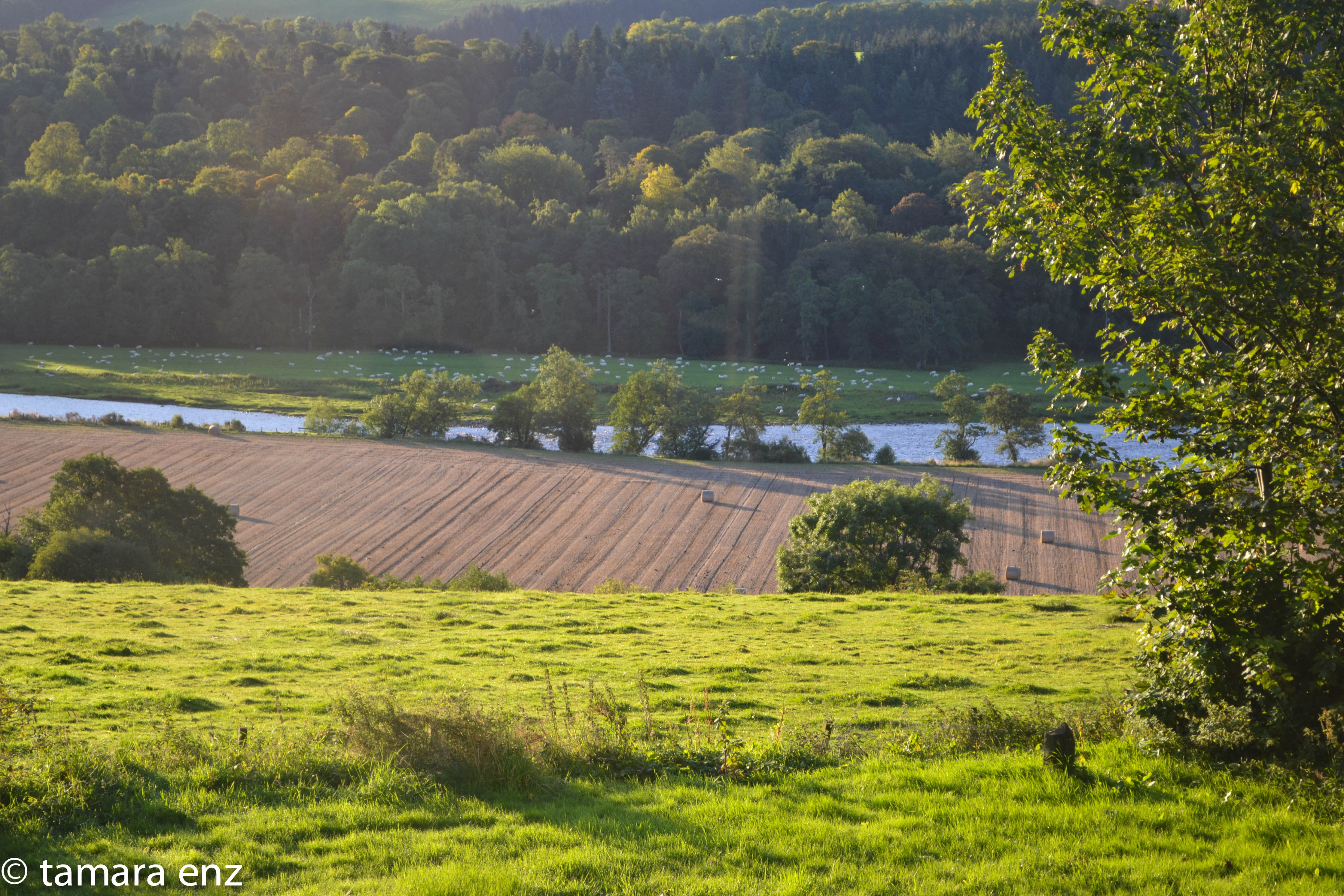
An idyllic morning scene from a vegetarian B&B, rolling hills, the River Spey, and fluffy sheep.
Bad things can happen to men and women. Sometimes they happen in remote places, sometimes not, occasionally to people traveling alone, sometimes not. Obviously, some places are inherently more dangerous, more restrictive, or more stressful. Being open to situations as they unfold and using common sense go a long way toward staying safe.
Every culture, every country, has its idea of what is safe and what is acceptable for women to do. Pushing the envelope with vegetarian sausage is not exactly ground breaking. But being able to travel freely, especially in your own country and specifically in one that prides itself on individual freedom, must not be a privilege.
I am not completely foolhardy. I carry bear spray, not mace but real bear spray, as in, for grizzly bears. I keep it in the truck and take it into the tent/camper with me each night.
Last summer while camping alone in Oklahoma I had the sudden thought that I should check the new canister. It was already late and dark and I was cozy in my tent but had some odd feeling that made me want to be sure it was good to go. Apparently, it was more than good to go. Before I fully removed the glow-in-the-dark safety clip the canister discharged, just a small blast, in the tent.
The tent is pretty roomy for one person – it is, after all, a 2-3-person tent. But no tent of any size is sufficient to escape bear spray. I closed my eyes and gulped spray-free air as soon as I heard the spray escape. Unzipping the tent and staggering outside I could feel the pepper burning into my nose and eyes. Cursing, and laughing at my own stupidity (once again!), with my eyes still shut I wandered the 50 meters to the truck, found the spare key, unlocked the door, found the water containers, and tipping my head sideways, poured two gallons of water across my face.
Eventually I was able to breath freely again and my eyes stopped burning and watering but the tent took much longer to air (think: weeks) and every time I turned in my sleeping bag a little puff of pepper spray would hit me. There is still a cayenne-red stain on the tent wall.
Now, when I am asked about camping alone I think of this incident. The fears we may have about stepping into the world like this are mostly unfounded. And, I am here to tell you: we are mostly our own worst enemies.
by aramatzne@gmail.com | 6 May 2016 | Roads Taken
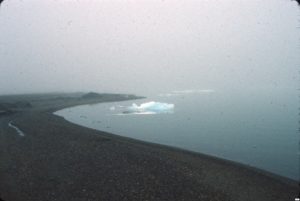
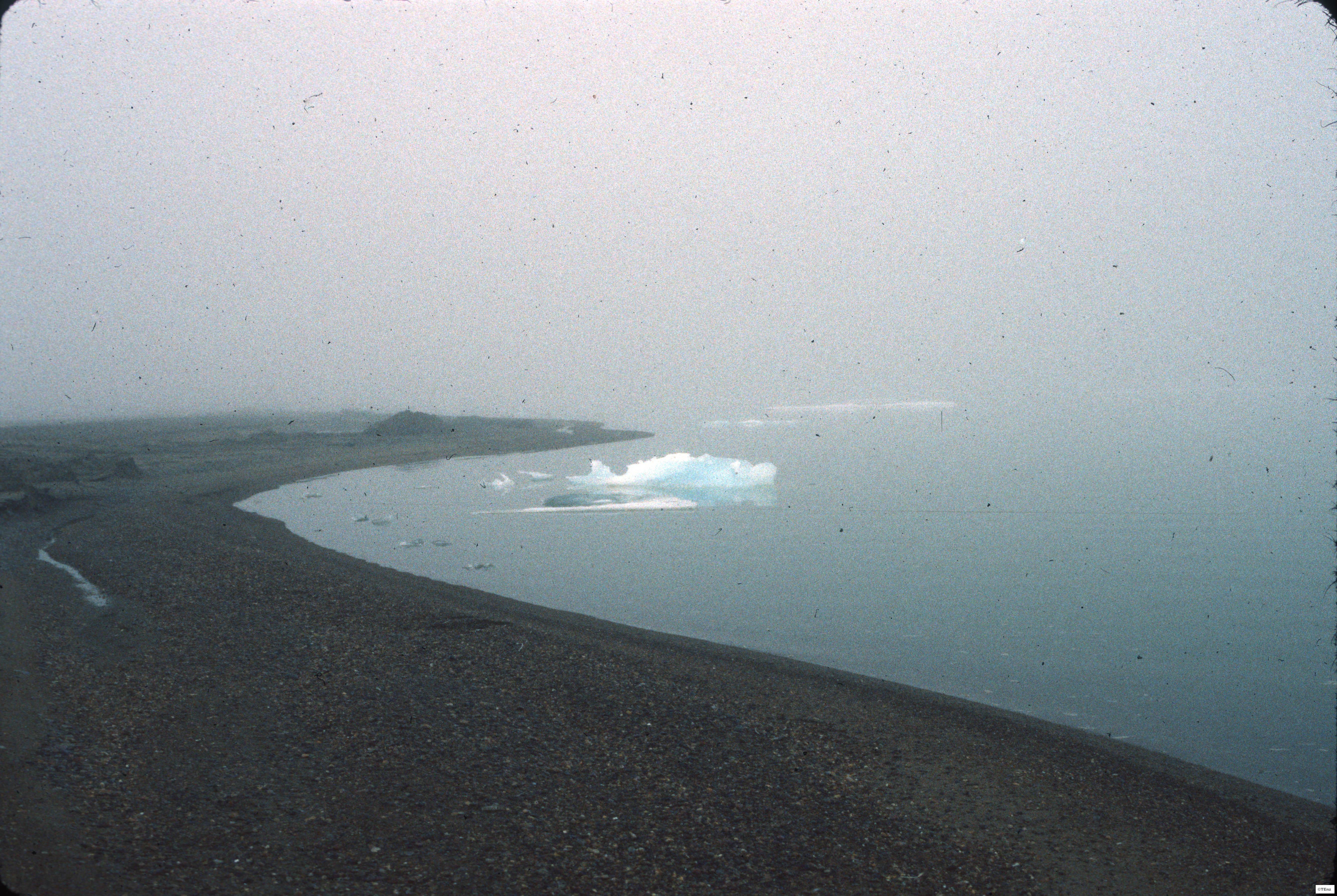
Cooper Island fog
We put thirty spokes together and call it a wheel;
But it is on the space where there is nothing that the usefulness of the wheel depends.
We turn clay to make a vessel;
But it is on the space where there is nothing that the usefulness of the vessel depends.
We pierce doors and windows to make a house;
And it is on these spaces where there is nothing that the usefulness of the house depends.
Therefore just as we take advantage of what is, we should recognize the usefulness of what is not. Dao de jing
29 July 2000, Cooper Island, Alaska
I’ve been walking since I got up this morning, and eating, of course. The wind and rain of the other day finally passed. Yesterday was foggy and freezing; everything was covered with a thin sheet of ice. The fog lifted briefly in the afternoon and it was warm. This morning when I awoke the air was absolutely dead calm, the fog as thick as it has ever been. And so, I walked.
There is silence and stillness to this fog world that is unmatched. Even intensely cold days in the north woods have sound and a feeling of motion: the creak of ice laden branches as they sway under their burdens, the crunch of sub-zero-temperature snow underfoot. This Arctic fog stillness is absolute.
To stand on the edge of the water and look into the gray void created by the sky and water uniting in color and texture is to truly experience sensory deprivation. Except for a few birds, my footsteps, and the almost imperceptible wash of water on the shore there is no sound, even these few things you must work to hear. All sense of sight is gone; the utterly calm water perfectly mirrors the sky, eliminating any evidence of a boundary between them. Without an automatic brain override of the fog, I would think I was losing my sight.
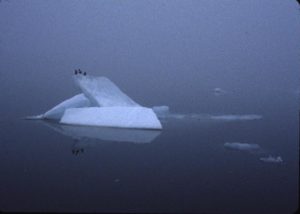
Black guillemots on ice floe
Now and then, on the lagoon side of the island, a dark spot that is a loon or a long-tailed duck will break free of the fog and show itself, giving definitive life to the water and proving that there is more than one dimension. On the ocean side, ice floes loom, moving imperceptibly; they often calve. The sound, that distorted fog sound, travels across the water. In the ocean there is no change, no motion, and no acknowledgement by the water or the air that the ice balance has shifted. Only silence once again.
Occasionally a red-throated loon gives its eerie, raspy, almost desperate call. No loon is in sight but I know it is among the ice floes, bill pointed to the foggy sky, head cocked to one side, listening into the silence for an answer. Listening for any sound at all, some proof that the rest of the world still exists. Is it only in our imagination that there was once wind and motion, sounds of water washing against the shore, or the persistent calls of numerous other birds?
I attempted many photos of this deprivation, some hard fast object in the foreground with the limitless depths of fog-gray-void behind. How does one record the lack of something to see? I’m not sure. If there is anything in these photos, any depth or contrast, any color, any motion, they will be stupendous indeed. In many ways this is the essence of my purpose here, to record that which is not plainly visible, to show that despite this seeming void, life thrives just out of view, and that there is usefulness in that which we cannot see and do not know.
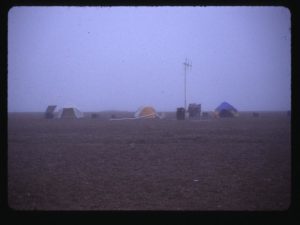
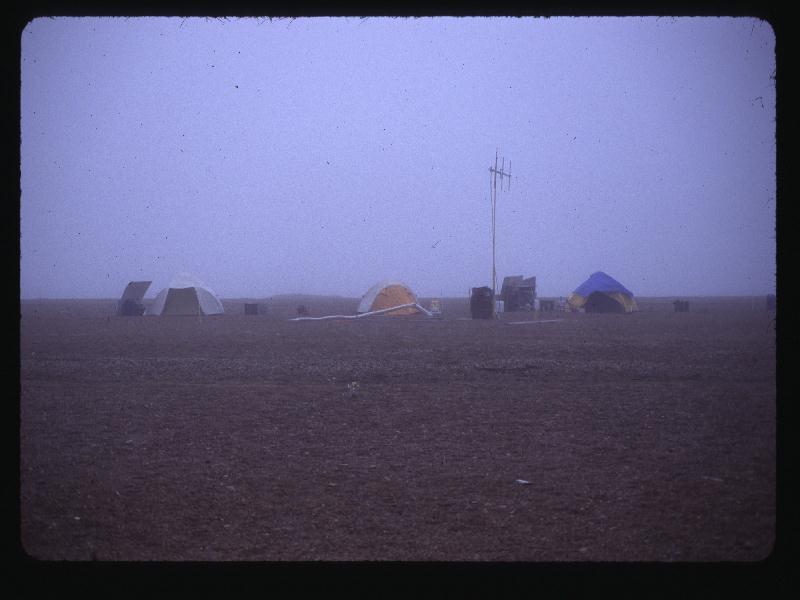
Cooper Island camp